
Most people think of fencing as something you put around the outside of a property. More and more homeowners are now using fencing and gates within their yard to create defined areas for different uses. When it is done thoughtfully, this kind of internal fencing does not make a garden feel closed in. Instead, it makes it more functional, safer, and easier to enjoy.
Whether you have kids, pets, animals, or valuable plants, cordoning off certain areas can save time, prevent damage, and give you greater peace of mind.
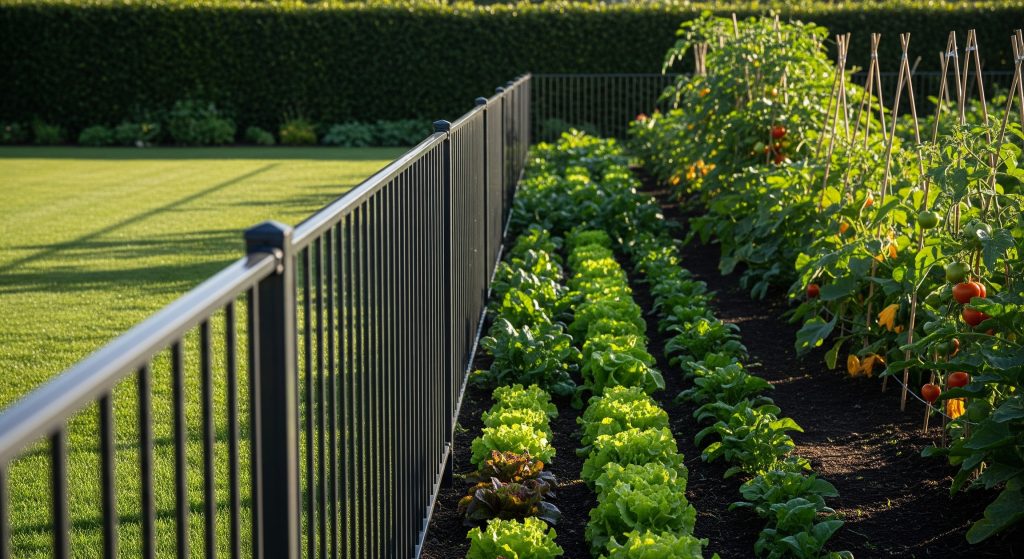
Vegetable gardens: protecting your effort
If you have ever spent weeks tending a vegetable patch only to have it trampled, dug up, or eaten, you will understand why this is one of the most commonly fenced areas.
Cordon fencing around a vegetable garden helps keep pets out, reduces accidental damage from foot traffic, and makes it clear that the area has a purpose. Even a low fence can be enough to act as a visual and physical boundary without blocking light or airflow.
Access is worth thinking about early. A simple gate makes it much easier to work in the garden without stepping over fencing or forcing your way through small gaps.
Opt for: Waist high fences, large distance between bars to let in light (or closely spaced bars if you’d like more shade for plants), fence slightly off the ground for ventilation and water run off, and a simple gate for easy access.
Areas for animals: dogs, chickens, and more
Animals benefit from clear boundaries just as much as people do. Dogs often need space to roam safely without getting into gardens, bins, or neighbouring properties. Chickens and other small animals need protection, both from predators and from wandering into areas where they can cause damage.
When fencing animal areas, it helps to consider a few practical details:
- Fence height and spacing so animals cannot jump or squeeze through
- Strong materials that will not loosen or fail over time
- Gates that latch securely and are easy to use every day
A well-defined animal area keeps the rest of your yard cleaner, calmer, and easier to manage.
Opt for: Fences with a concrete base and/or a deep foundation to prevent digging, bars or frames that extend very close to the ground, narrowly spaced bars to prevent animals from getting out, latch gates.
Playgrounds and kids’ spaces
Creating a fenced play area does not mean isolating children. It gives them a safe place where they can play freely and confidently. This is especially useful if your yard includes driveways, slopes, water features, or other hazards.
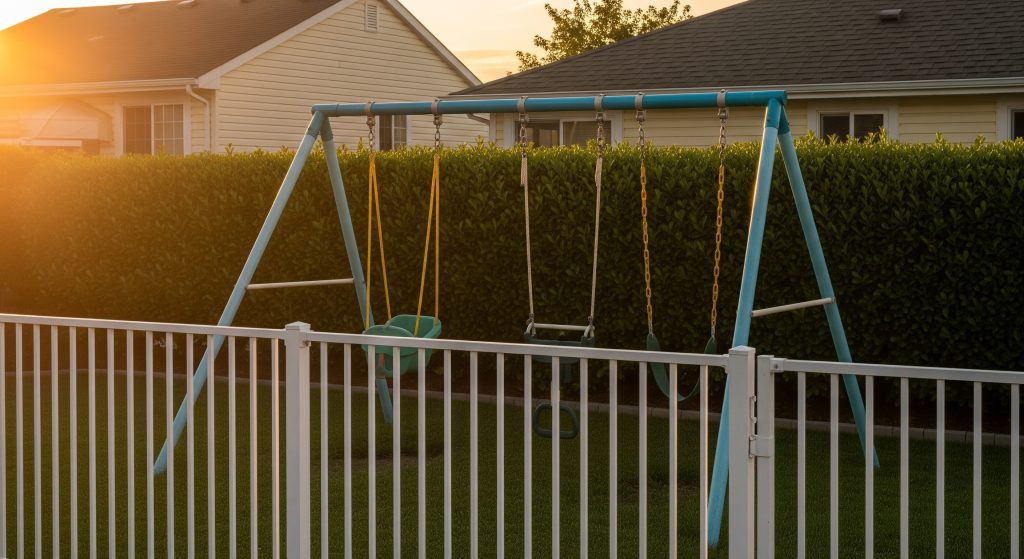
Many parents choose to fence play areas so they can relax knowing children are not wandering into higher-risk parts of the property. Visibility matters here, so fencing styles that allow clear sightlines are often the best choice.
Opt for: Vertical bars to prevent climbing, narrow bars with moderate spacing so that children can be visible to parents and guardians.
Protecting valuable plants
Some plants take years to grow or hold real financial and sentimental value. Bonsai, orchids, rare exotic plants and trees can easily be damaged by pets, children, or visitors who are not aware of how delicate they are. They can also be a target for theft, as it is easy to carry away a potted plant worth thousands of dollars.
Low-profile fencing works well in these situations. It does not need to look heavy or restrictive. Its main purpose is to create a clear boundary and signal that the area deserves care and attention.
Opt for: High fences with minimal gaps, bars that extend over the top of the frame for added security, a keypad on the gate for extra security.
Generally dangerous or restricted areas, including driveways
Some properties have areas that are not designed for regular access. These might include storage zones, equipment areas, steep banks, or utility spaces. Fencing these areas helps prevent accidents and makes it clear where people should avoid entering. In these cases, fencing is less about appearance and more about safety and clarity.
Opt for: Simple bar fencing with vertical bars to avoid climbing.
Pools and water features
Pool fencing is a legal requirement, but it is also one of the most important safety measures you can put in place. Proper fencing and self-closing gates significantly reduce the risk of accidents, particularly for children and pets.
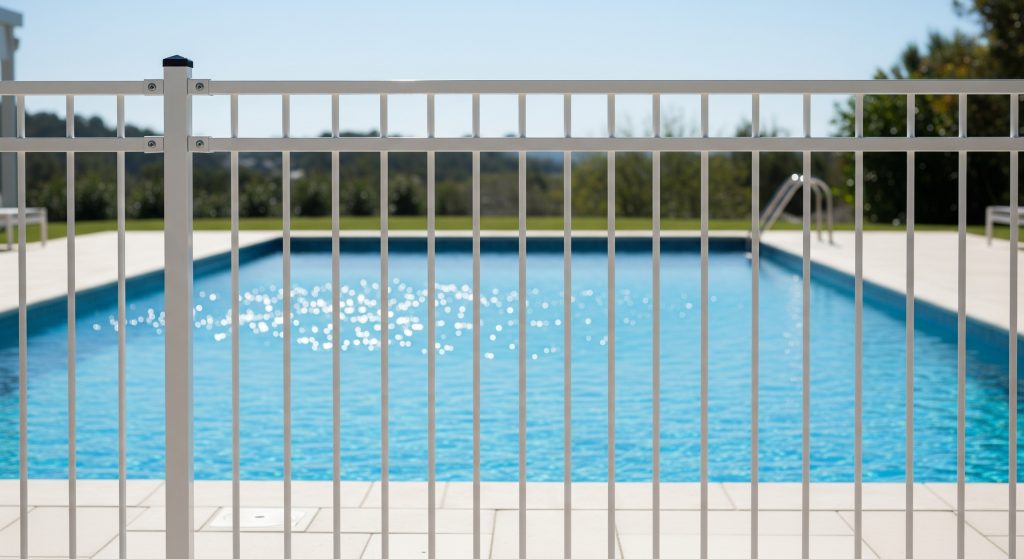
Well-designed pool fencing does not need to detract from your outdoor space. Modern options can keep things safe while still feeling open and visually balanced.
Opt for: Vertical bars to prevent climbing, narrow bars with moderate spacing so that children can be visible to parents and guardians.
Click here to read our blog post about Swimming pool gate and fence requirements in Tauranga.
Cordoning off parts of your garden is not about restricting space. It is about making your property work better for the way you live. With the right fencing and gates, you can protect what matters, improve safety, and create clear, usable spaces that feel intentional rather than cluttered.